
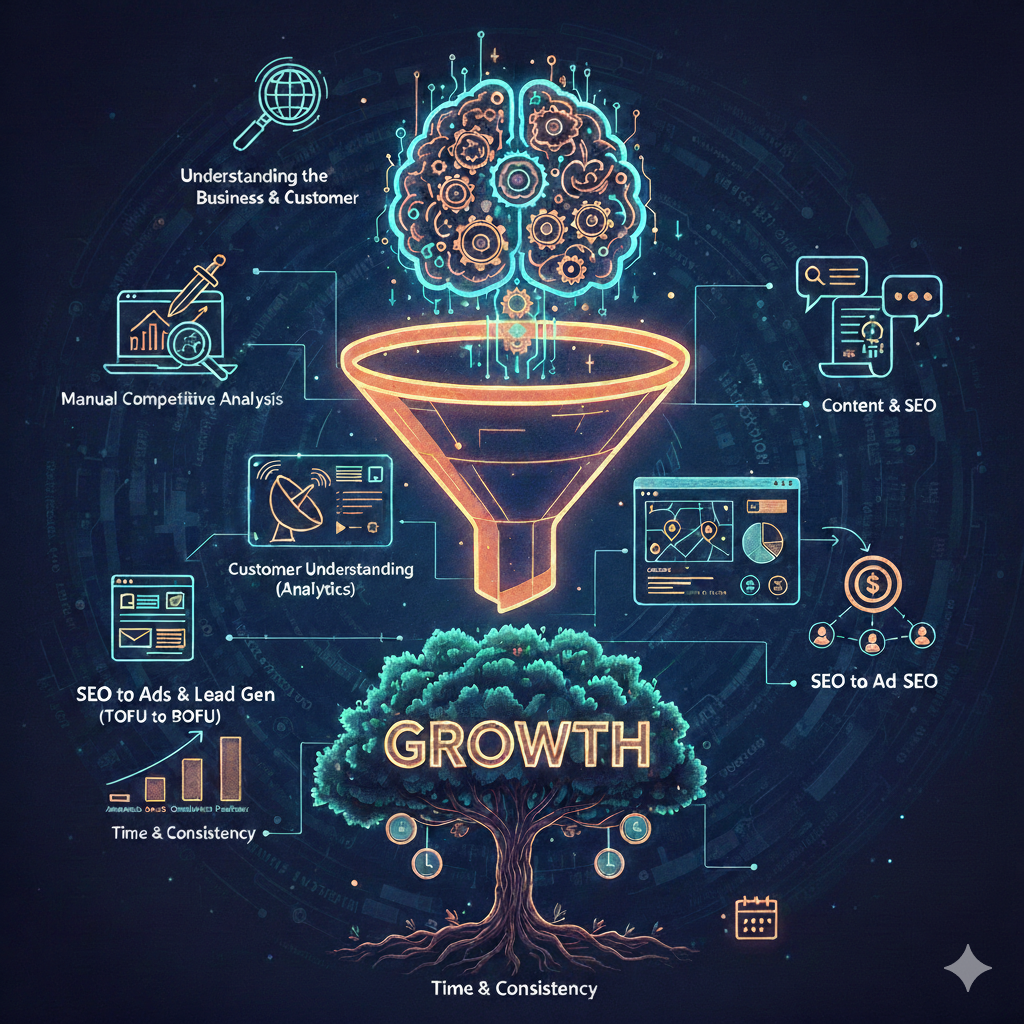
When I started working on real SEO projects, I quickly realised that it is very different from what I usually studied in college and read in guides. It is not just about keywords or rankings; it is about understanding the business and the customer, and building a structured marketing funnel over time.
Working on multiple client projects helped me understand how SEO actually works in practice. In this blog, I want to share what I learned during my first SEO projects and how these lessons shaped my approach as a beginner digital marketer.
SEO Starts With Understanding the Business, Not Keywords
One of the biggest lessons I learned early on is that SEO does not begin with keyword research. It begins with understanding the company.
Before working on any SEO task, it is important to understand:
- The product or service the company offers
- The problem it solves
- The competitors in the market
- The target customers and their behaviour
Without this clarity, even well-researched keywords may not deliver meaningful results. SEO works best when it aligns with business goals and real user intent.
Manual Competitive Analysis Matters More Than Just Using Tools
While working on SEO tasks, I performed manual competitive analysis by searching keywords directly on Google and analyzing the results. This helped me understand how competitors position themselves and what type of content is already ranking.
I also realised that tools like SEMrush or Ubersuggest are helpful, but they are not always precise or complete. Tools provide direction, but they cannot fully replace manual research. Understanding competitors, analysing their content, and studying their messaging often gives deeper insights than relying only on tools.
This is why manual analysis plays a crucial role, especially at the beginning of any SEO, lead generation, or GTM activity.
Content Writing and SEO Work Together
I’ve been right about content writing and SEO; they both will always go hand in hand.
SEO-friendly content should:
- Answer real user questions
- Be easy to read and scan
- Include keywords naturally
- Provide value instead of just information
Writing content with SEO in mind helped me create blogs that are not only optimised for search engines but also useful for readers.
Understanding the Customer Through the Funnel
In many cases, understanding the customer fully happens after execution begins.
At the top of the funnel, SEO helps bring traffic to the website. Once traffic starts coming in, tools like Google Analytics help identify:
- Which regions users are visiting from
- Basic age and demographic data
- Pages users interact with the most
This data helps refine assumptions about the target audience and improves decision-making at later stages of marketing.
From SEO to Ads and Lead Generation
Once there is clarity on who is engaging with the website, marketing efforts become more focused.
Based on user behaviour and traffic insights:
- Ads can be targeted to specific regions and demographics
- Lead generation strategies can be aligned with the right audience
- Outreach efforts become more personalised
Instead of trying to reach everyone, the focus shifts to reaching people who are more likely to convert.
Lead Nurturing From TOFU to BOFU
After identifying quality leads, the next step is nurturing them through the funnel.
This typically includes:
- Sending LinkedIn connection requests
- Thanking prospects for accepting the request
- Sharing follow-up messages based on interest
If leads do not respond on LinkedIn, email marketing becomes an important channel. Over time, these leads are nurtured from:
- Top of the Funnel (awareness)
- Middle of the Funnel (consideration)
- Bottom of the Funnel (purchase decision)
This process helped me understand how SEO, ads, outreach, and lead nurturing are all connected.
SEO Takes Time and Consistency
One important lesson I learned is that SEO does not deliver instant results. Even after implementing best practices, rankings and traffic take time to improve.
SEO requires:
- Consistency
- Patience
- Continuous optimisation
Small improvements made consistently lead to strong long-term results.
Final Takeaway
Working on real SEO projects taught me that SEO is not just about rankings; it is about understanding the business and the customer and building a funnel that supports long-term growth. From manual competitor research to content strategy, lead nurturing, and outreach, every part of marketing connects when you focus on user intent and business goals.
As a beginner digital marketer, these lessons helped me build a stronger foundation and a more structured approach to SEO. If you are starting out, too, focus on learning by doing, staying consistent, and improving step by step, because SEO rewards patience and progress over perfection.
Pingback: AI SEO and the Future of Search: Why Fundamentals Matte
Thank you for the comment. Yeah sure I will read.
Pingback: SEO Is Not Dead, But Traffic Without Revenue Is
Yeah that’s True and we are really going through it.